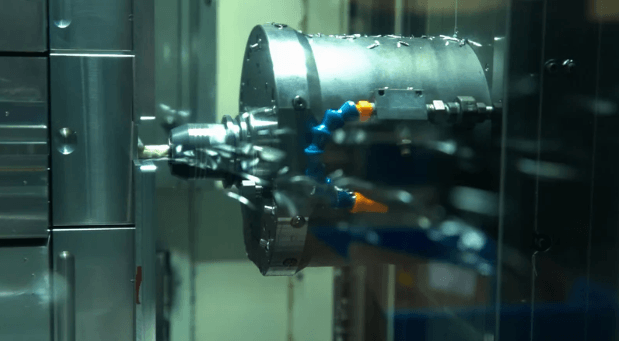
Whether you’re developing a new product, replacing a discontinued component, or optimizing a production part, custom CNC parts offer the dimensional precision and material versatility to meet virtually any engineering requirement. custom CNC parts. Understanding the end-to-end process from design through delivery helps engineers and procurement professionals work more effectively with CNC machining partners to achieve the best possible outcomes.
The Custom CNC Parts Lifecycle
Custom CNC part production follows a well-defined process from initial inquiry through final delivery. Each stage has specific inputs, outputs, and quality gates that ensure the delivered parts meet requirements.
Design and DFM Review
The process begins with a complete design, typically provided as a 3D CAD model and 2D drawing with dimensions and tolerances. Reputable CNC machining services conduct a design for manufacturability (DFM) review to identify features that may be difficult to machine or that unnecessarily drive cost.
Quoting and Order Placement
The machining service reviews the design, selects machining processes and tooling, and calculates a price and lead time. Clear communication about quantity, required delivery date, material certification requirements, and quality documentation expectations prevents misunderstandings.
Minimizing Cost for Custom CNC Parts
CNC machining cost is driven primarily by machining time, material cost, tooling, and setup. Understanding these cost drivers enables designers to make choices that reduce cost without compromising part function.
Key Design Decisions That Affect Cost
Removing unnecessary tight tolerances, increasing internal corner radii to match standard tool sizes, avoiding deep narrow pockets, and reducing the number of part setups required are among the most impactful design changes for reducing CNC machining cost.
- Maximize tolerance bands on non-critical dimensions
- Use standard material sizes to minimize waste
- Design parts to minimize required setups
- Avoid proprietary surface finish requirements when standard finishes suffice
- Order prototype quantities before committing to production
Quality Assurance for Custom CNC Parts
Quality assurance begins with clearly communicated requirements on engineering drawings and specifications. The machining service should confirm that all critical dimensions have been verified before shipment, with documentation provided in an inspection report.
- Provide complete, unambiguous engineering drawings
- Specify all critical dimensions with appropriate tolerances
- Request first article inspection for new parts
- Define material certification requirements explicitly
- Communicate surface finish requirements with Ra values
See also: Simplifying Business Setup in Hong Kong
Frequently Asked Questions
What is the minimum order quantity for custom CNC parts?
Many CNC machining services accept orders for single prototype parts. Production quantities of ten to several hundred are common for custom components. Some providers offer online quoting and ordering platforms that accommodate very small quantities economically.
How do I protect my design intellectual property when outsourcing CNC machining?
Use non-disclosure agreements (NDAs) with all potential suppliers before sharing proprietary designs. Many reputable CNC machining services routinely sign NDAs as part of their standard business practice. Consider filing provisional patents before outsourcing sensitive designs.
Can custom CNC parts be finished or coated after machining?
Yes. Most CNC machining services offer a range of secondary services including anodizing, powder coating, plating, heat treatment, engraving, and assembly. Combining these services with machining at a single source reduces logistics complexity and lead time.
Conclusion
Custom CNC parts represent one of the most flexible and capable manufacturing solutions available today. By investing in proper design, clear communication with your machining partner, and appropriate quality assurance, you can reliably produce custom components that meet your most demanding engineering requirements. The key to success lies in treating your CNC machining service as a technical partner, engaging them early in the design process to benefit from their manufacturing expertise and optimize both cost and quality.