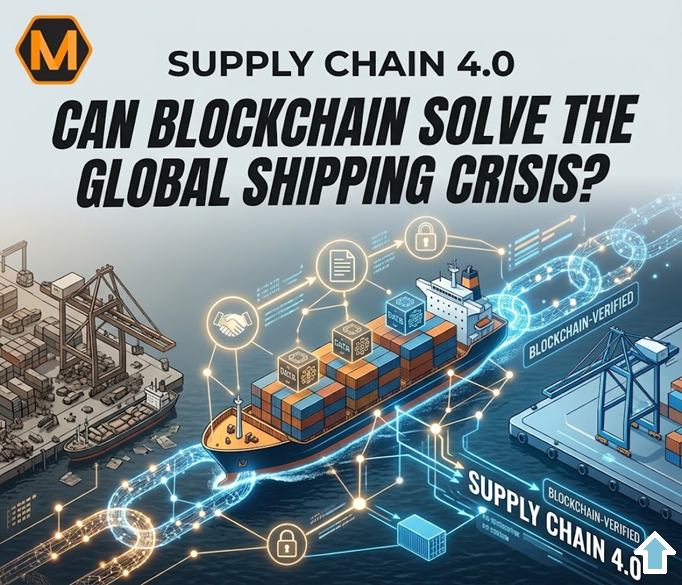
The global economy is currently navigating a “perfect storm.” From the lingering aftershocks of port congestion to the rising costs of fuel and labor, the traditional methods of moving goods from point A to point B are buckling under pressure. We are no longer in an era where “good enough” logistics suffice. The world is transitioning into Supply Chain 4.0—a digital-first, hyper-connected ecosystem designed to replace the fragmented, paper-heavy systems of the past. At the heart of this revolution is a question that has captivated both tech moguls and logistics managers: Can blockchain technology finally fix the broken links in our global shipping lanes?
The current global shipping crisis isn’t just a matter of stuck ships; it is a crisis of data. Thousands of containers sit idle because of lost paperwork, mismatched manifests, and a lack of real-time visibility. For students and researchers diving into these complexities, finding verified data is a challenge. Many turn to professional platforms like myassignmenthelp.services to understand these industrial shifts. Using a brand like my assignment help ensures that academic papers on logistics reflect the most current 2026 trade data and technological trends rather than outdated textbooks.
The Invisible Bottlenecks: Why the System is Failing
To understand how blockchain helps, we first have to look at why the current system fails. Traditional supply chains rely on a “hand-off” model. A manufacturer hands a product to a carrier, who hands it to a port authority, who hands it to a customs agent, and so on. At every stage, a new set of documents is created. If one person makes a typo or a document is delayed by a day, the entire chain grinds to a halt. This is the Logistical Bottleneck that defines our modern era.
In a standard international shipment, over 30 different organizations and 200 interactions are involved. Most of these interactions still rely on physical paper, PDFs, and manual emails. This “analog” approach in a digital world is the primary reason for the Supply Chain Disruptions we see today.
| Feature | Traditional Supply Chain (3.0) | Supply Chain 4.0 (Blockchain Enabled) |
| Data Storage | Centralized, Siloed Databases | Decentralized, Shared Ledger |
| Documentation | Physical Paper & Manual PDFs | Digital “Smart” Documents |
| Trust Model | Verification by Third Parties | Cryptographic Proof & Consensus |
| Visibility | Reactive (Updates after the fact) | Proactive (Real-time tracking) |
| Payment | Manual Invoicing (30-90 days) | Automated Smart Contracts (Instant) |
1. Transparency Through the Immutable Audit Trail
One of the biggest issues in the shipping crisis is trust—or the lack of it. When a shipment of perishable goods is ruined because a refrigerated container lost power, the shipping company might blame the port, and the port might blame the truck driver.
With Blockchain in Logistics, every event is recorded in an Immutable Audit Trail. This means once a piece of data is entered—such as the temperature of a container or the time it cleared customs—it cannot be changed or deleted.
- Accountability: Everyone knows exactly who was in possession of the goods at any given second.
- Security: Fraud is significantly reduced because you cannot “fake” a digital signature on a decentralized network.
- Speed: Customs clearance, which used to take days of manual verification, can now happen in minutes through automated data sharing.
2. Smart Contracts: Automating the Paperwork
Imagine if a truck driver was paid the exact second they dropped off a shipment, without having to wait 30 days for an invoice to be processed. This is possible through Smart Contracts. These are self-executing programs stored on a blockchain that trigger an action when certain conditions are met.
In a Supply Chain 4.0 environment, a smart contract could be set to release payment to a supplier as soon as a port’s digital sensor confirms the arrival of a container. This solves the liquidity crisis that many small shipping firms face. By automating the “if/then” scenarios of international trade, we remove the human error and administrative lag that contributes to Supply Chain Disruptions.
Before reaching the next stage of implementation, students often find themselves overwhelmed by the sheer technicality of these systems. Seeking Business management assignment help becomes a strategic move to master the nuances of organizational efficiency and digital transformation without getting lost in the jargon.
3. Real-Time Traceability and ESG Compliance
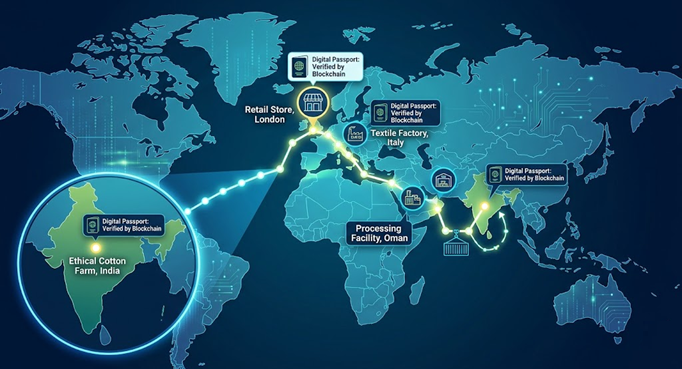
In 2026, consumers and governments are demanding more than just fast shipping; they want ethical shipping. ESG Compliance (Environmental, Social, and Governance) is now a major part of Operations Management.
Blockchain provides a Digital Product Passport. This allows a company to prove that their goods were sourced sustainably. For example, a clothing brand can show the exact farm where their cotton was grown and the exact factory where it was spun, with every step verified on the blockchain. This level of Real-time Traceability is becoming a legal requirement in many global regions, including the UK and Singapore.
4. Solving the “Container Shortage” Myth
Often, the global shipping crisis is blamed on a lack of physical containers. However, data suggests there are enough containers—they just aren’t in the right places. Poor communication leads to “ghost” bookings and empty containers sitting in ports for weeks.
Blockchain allows for better Asset Management. By providing a transparent view of where every container is globally, shipping lines can collaborate to share space and move empty units back to manufacturing hubs like Shanghai or Ho Chi Minh City more efficiently. This reduces the Container Shortage by maximizing the utility of existing equipment through Smart Logistics.
5. Cybersecurity and Data Integrity
As supply chains go digital, they become targets for hackers. A cyberattack on a major shipping line can freeze global trade for days. Traditional centralized servers are vulnerable “single points of failure.”
Because blockchain is Decentralized, there is no single server to hack. To change the data, a hacker would have to compromise more than half of the computers in the entire network simultaneously, which is practically impossible. This provides a layer of Cyber Resilience that is essential for national security and global economic stability.
See also: Simplifying Business Setup in Hong Kong
The Academic Challenge: Mapping the Future of SCM
For college students majoring in Business Management or Logistics 4.0, the transition to these digital systems is the most important topic of the decade. It requires a blend of technical knowledge (how the blockchain works) and strategic knowledge (how to manage a workforce through these changes).
Studying SCM Theory (Supply Chain Management) today is vastly different than it was five years ago. Students are no longer just learning about warehouses; they are learning about AI-Agentic Supply Chains and Decentralized Networks. Writing a Case Study Analysis on these topics requires a deep dive into how technology reduces inefficiencies and stabilizes global markets.
The Human Element: Overcoming the Skills Gap
Technological solutions are only as good as the people operating them. One of the biggest hurdles to Industry 4.0 isn’t the code—it’s the culture. Managers who have spent 30 years using paper ledgers are often resistant to switching to a digital interface.
Educational institutions are now focusing on “Digital Literacy” within business degrees. This involves teaching students how to interpret Big Data and manage Automated Systems. The goal is to create a new generation of leaders who see technology not as a threat, but as a partner in solving global crises.
Is Blockchain a Magic Wand?
While the potential is massive, blockchain is not a “magic wand” that will fix the shipping crisis overnight. There are still hurdles to overcome:
- Standardization: Different shipping lines need to agree on which blockchain to use. If everyone uses a different system, we are back to square one.
- Infrastructure: Ports in developing nations need the digital infrastructure (high-speed internet and IoT sensors) to participate in Industry 4.0.
- Cost of Entry: While it saves money in the long run, the initial setup for a Digital Supply Chain can be expensive for smaller players.
Despite these challenges, the momentum is unstoppable. Major global carriers have already begun integrating DLT to handle their bill of lading processes. The reduction in paperwork alone is estimated to save billions of dollars annually.
Conclusion: Navigating the New Frontier
The Global Shipping Crisis was a wake-up call for the world. It showed us that our old ways of moving goods were too fragile for a modern, high-speed economy. Supply Chain 4.0 represents a shift toward a more resilient, transparent, and efficient future.
By leveraging Blockchain in Logistics, we can move away from a system defined by “bottlenecks and blame” to one defined by “data and delivery.” For the students and professionals currently studying these shifts, the goal is clear: master the technology today to lead the global markets of tomorrow. Whether you are analyzing a complex business problem or managing a global fleet, the digital ledger is the future of trade.
Frequently Asked Questions
1. How does blockchain differ from traditional tracking systems?
Traditional tracking relies on centralized databases where information is updated manually by different parties, often leading to delays and errors. Blockchain uses a shared, decentralized ledger where all participants see the same real-time data simultaneously, ensuring a single version of the truth.
2. Can blockchain technology physically move containers faster?
While it doesn’t speed up the ships themselves, it significantly reduces the administrative “friction” at ports. By automating documentation and customs clearance, it prevents containers from sitting idle for days due to missing or incorrect paperwork.
3. What are “Smart Contracts” in the context of shipping?
Smart contracts are digital agreements that execute automatically when specific conditions are met. For example, once a GPS sensor confirms a cargo has reached its destination, the system can instantly trigger payments or release legal documents without manual intervention.
4. Is this technology already being used in the industry?
Yes, several of the world’s largest shipping lines and port authorities have already launched digital ledger pilots. These systems are currently being used to digitize bills of lading and track high-value goods across international borders to improve transparency.
About The Author
Min Seow is a Senior Academic Consultant at MyAssignmentHelp, specializing in the intersection of emerging technology and global logistics. With a focus on digital transformation, Min provides expert insights that help students and professionals navigate the complexities of modern business systems.