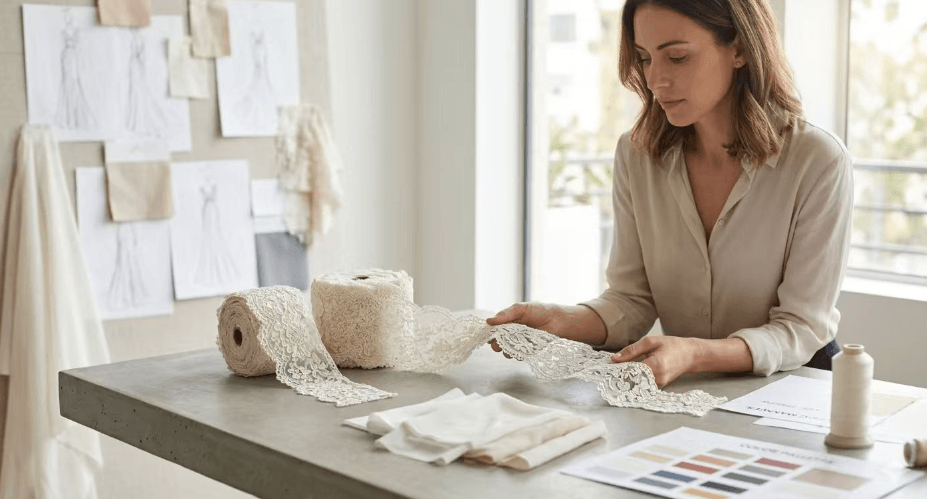
In modern luxury fashion, elegance is no longer defined by excess. From couture gowns and premium lingerie to bridalwear and evening fashion, today’s consumers value craftsmanship, texture, and refined simplicity. For sourcing managers, understanding high-quality bridal lace trim and embroidery textile production has become essential for creating garments that feel timeless, sophisticated, and commercially valuable.
Lace Trim: The Language of Modern Luxury Fashion
Lace is no longer limited to traditional wedding aesthetics. Contemporary designers are integrating bridal lace trim into luxury fashion collections, lingerie, resortwear, couture dresses, and elevated ready-to-wear garments.
The appeal lies in its ability to create visual softness while preserving structural elegance. For sourcing managers, selecting the right lace trim supplier requires more than evaluating price points. Fabric density, embroidery precision, durability, softness, and dye consistency all directly affect the perceived value of a finished garment.
Fashion brands increasingly request free lace trim samples before bulk production to assess stretch recovery, edge finishing, and compatibility with silk, satin, chiffon, and mesh constructions. Premium lace trim fabrics are especially effective for neckline accents, sleeve detailing, corsetry finishes, luxury lingerie edges, and couture layering techniques.
Brands seeking tailored textile development can explore custom lace trim solutions for fashion and couture applications.
Embroidery Fabrics: Creating Depth Without Excess
In minimalist fashion design, embroidery serves as a sophisticated alternative to heavy embellishment. High-quality embroidery fabric introduces depth, movement, and tactile elegance while maintaining clean silhouettes.
Luxury eveningwear, sheer overlays, couture jackets, and premium blouses increasingly rely on lightweight embroidered textiles to create visual richness without visual weight. A reliable embroidery fabric manufacturer understands how thread count, mesh quality, stitch spacing, and embroidery layering influence both comfort and garment longevity.
Modern sourcing managers also prioritize partnerships with experienced embroidery fabric suppliers capable of maintaining consistency across seasonal collections and international production cycles.
For scalable textile sourcing and couture-grade materials, explore premium wholesale embroidery fabric collections designed for luxury apparel manufacturing.
Lightweight Fabrics: Chiffon, Tulle & Soft Transparency
Chiffon and tulle remain essential in contemporary apparel design because they create movement, softness, and fluidity. These lightweight fabrics complement structured lace and embroidery by adding airiness to silhouettes.
Designers frequently combine sheer textiles with wholesale lace trim to develop layered gowns, transparent sleeves, luxury lingerie panels, and soft draped eveningwear. In premium fashion manufacturing, sourcing managers should evaluate transparency consistency, wrinkle resistance, drape behavior, and skin comfort when selecting lightweight materials.
The combination of chiffon, tulle, and refined embroidery has become particularly influential in luxury resort collections, contemporary couture fashion, and elevated minimalist apparel.
See also: Simplifying Business Setup in Hong Kong
Recommended Fabric Applications for Fashion & Apparel
| Application | Recommended Fabric | Luxury Effect |
| Couture Evening Gowns | Embroidery fabric + chiffon | Fluid elegance and dimension |
| Luxury Lingerie | Bridal lace trim + mesh | Soft femininity and refinement |
| Fashion Blouses | Lace trim fabrics | Elegant minimalist detailing |
| Designer Sleeves & Collars | Custom lace trim | Signature couture identity |
| Resort & Layered Dresses | Tulle + embroidery overlays | Lightweight luxury movement |
Conclusion: Strategic Textile Sourcing Defines Premium Fashion
The future of luxury apparel lies in refined material selection rather than excessive ornamentation. Whether developing couture collections, lingerie lines, bridal fashion, or premium ready-to-wear garments, sourcing managers play a critical role in shaping brand identity through textile quality.
Partnering with trusted embroidery fabric manufacturers, requesting free lace trim samples, and investing in reliable wholesale embroidery fabric and lace production partners can dramatically improve consistency, design sophistication, and long-term product value.
In an era where consumers increasingly appreciate subtle craftsmanship, the most memorable fashion pieces are those built upon exceptional fabrics, intentional detailing, and timeless restraint.