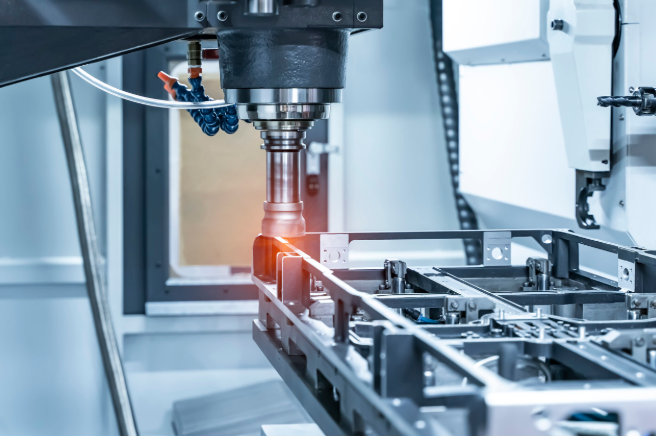
In today’s competitive manufacturing environment, precision, efficiency, and adaptability are critical for producing high-quality components. Industries such as aerospace, automotive, medical devices, and electronics demand parts that meet stringent tolerances and perform reliably under challenging conditions. CNC machining has become a cornerstone of modern production, offering the accuracy and consistency needed to meet these expectations. Among its advanced applications, high precision cnc milling plays a vital role in creating complex and reliable components, supporting innovation across various sectors.
Understanding CNC Turning and Milling
CNC turning and milling are complementary machining processes used to create precise components from a variety of materials. While CNC turning focuses on rotating workpieces to achieve cylindrical or symmetrical geometries, CNC milling involves using rotating cutting tools to remove material from a stationary workpiece to produce intricate shapes, slots, and complex surfaces.
high precision cnc milling combines advanced software programming, multi-axis machinery, and specialized cutting tools to achieve exact dimensions, tight tolerances, and fine surface finishes. This capability allows manufacturers to produce parts that are both functional and aesthetically precise, even for highly complex designs.
The Importance of Precision in Modern Manufacturing
Accuracy and consistency are fundamental in manufacturing applications where component failure can have serious consequences. Aerospace components, automotive engine parts, and medical devices all require high levels of precision to ensure safety, functionality, and reliability. High precision cnc milling ensures that each part adheres to exact specifications, eliminating inconsistencies that may arise from manual processes.
This level of accuracy also reduces material waste, minimizes rework, and streamlines production workflows. By investing in high-precision machining, manufacturers can achieve a balance between cost-efficiency and superior product quality.
Applications of High Precision CNC Milling
High precision cnc milling has applications across numerous industries, enabling the production of components that meet both functional and regulatory requirements.
Aerospace
In aerospace manufacturing, components such as structural fittings, engine parts, and control mechanisms must meet stringent tolerances. High precision cnc milling allows engineers to produce lightweight yet strong components that ensure safety and optimal aircraft performance. Multi-axis milling machines enable the creation of intricate geometries required in modern aerospace designs, reducing assembly complexities and enhancing reliability.
Automotive
Automotive manufacturers rely on high precision cnc milling to produce engine blocks, transmission housings, and suspension components. Accurate machining ensures that parts fit perfectly and perform efficiently, improving vehicle safety, fuel efficiency, and overall performance. Complex milling capabilities also enable innovation in electric vehicle designs, where precision and reliability are paramount.
Medical Devices
The medical industry benefits greatly from high precision cnc milling. Surgical instruments, implants, prosthetic components, and diagnostic devices require tight tolerances and smooth finishes to ensure performance and patient safety. CNC milling allows manufacturers to meet stringent regulatory standards while producing parts that function reliably in critical applications.
Industrial Machinery and Electronics
In industrial machinery and electronics, precision-milled components improve operational efficiency, reduce wear, and enhance system performance. Gears, housings, connectors, and enclosures produced with high precision cnc milling contribute to longer equipment lifespans and more reliable operations. Custom designs allow manufacturers to address specific functional requirements, improving the performance of industrial systems.
Advantages of High Precision CNC Milling
High precision cnc milling offers numerous benefits that make it a preferred solution in modern manufacturing.
Accuracy and Consistency
The primary advantage is the ability to achieve highly accurate dimensions and consistent quality across multiple parts. Tight tolerances ensure that components fit perfectly and function reliably in assemblies, reducing errors and potential failures.
Complex Geometry
Advanced CNC milling machines, especially multi-axis systems, allow manufacturers to produce complex shapes, angled surfaces, and intricate features in a single setup. This capability reduces the need for multiple machining steps and ensures uniformity throughout production.
Efficiency
Automation in CNC milling reduces production time and minimizes the risk of human error. High-speed milling, combined with optimized tool paths, improves throughput without compromising quality.
Cost-Effectiveness
Although the initial investment in CNC milling equipment is significant, high precision machining reduces waste, lowers labor costs, and increases production efficiency. Over time, these benefits lead to significant cost savings while maintaining superior quality.
Quality Control in CNC Milling
Quality assurance is a cornerstone of high precision cnc milling. Components often perform critical functions where failure is not an option. Manufacturers implement rigorous inspection protocols, including in-process measurements, final verification, and advanced tools like coordinate measuring machines (CMMs).
Skilled engineers monitor every stage of production to ensure that parts meet design specifications, reducing scrap, improving yields, and maintaining consistent performance across batches. Strict quality control also enhances customer trust and supports regulatory compliance.
See also: What I Wish I Knew About Buying Tech in UAE Before I Arrived
Role in Product Development and Prototyping
High precision cnc milling is integral to prototyping and product development. Rapid prototyping allows engineers to test the form, fit, and function of components before committing to full-scale production. Milled prototypes accurately reflect the final product, providing realistic feedback on performance, tolerances, and material suitability.
This capability shortens development timelines, reduces costs, and allows manufacturers to innovate confidently, particularly in high-stakes industries such as aerospace, automotive, and healthcare.
Sustainability in CNC Milling
Sustainability has become a priority in modern manufacturing. High precision cnc milling supports environmentally responsible practices by minimizing material waste, optimizing cutting strategies, and improving energy efficiency. Advanced software enables precise tool paths, reducing scrap and conserving resources, while many manufacturers recycle materials to further support sustainable operations.
Skilled Professionals Behind the Technology
While CNC machines are automated, skilled engineers, programmers, and machinists are essential. Their expertise ensures optimal tool selection, accurate programming, and efficient troubleshooting. Professionals with knowledge of materials, tolerances, and machine capabilities help produce high-quality components consistently.
Ongoing training is crucial to keep pace with evolving technologies, multi-axis machines, and advanced software systems, ensuring manufacturers can fully leverage high precision cnc milling capabilities.
Building Long-Term Partnerships
Reliability, communication, and collaboration are key to long-term success in CNC machining. Providers that deliver consistent quality, meet deadlines, and adapt to client requirements often become strategic partners rather than one-time vendors.
High precision cnc milling service providers typically offer design consultation, process optimization, and flexible production schedules, enabling clients to achieve their manufacturing goals efficiently. Strong partnerships enhance innovation, reduce costs, and improve overall production outcomes.
The Future of High Precision CNC Milling
The future of high precision cnc milling is closely linked to automation, multi-axis machining, and digital integration. Emerging technologies such as real-time monitoring, predictive maintenance, and smart manufacturing are further enhancing precision, efficiency, and scalability.
As industries continue to demand more complex, lightweight, and reliable components, high precision cnc milling will remain a vital resource for producing cost-effective, high-quality parts. Companies investing in advanced machinery, skilled personnel, and robust quality systems will continue to lead in modern manufacturing.
High precision cnc milling provides the accuracy, flexibility, and reliability needed to meet modern industrial challenges while supporting innovation, sustainability, and long-term growth.