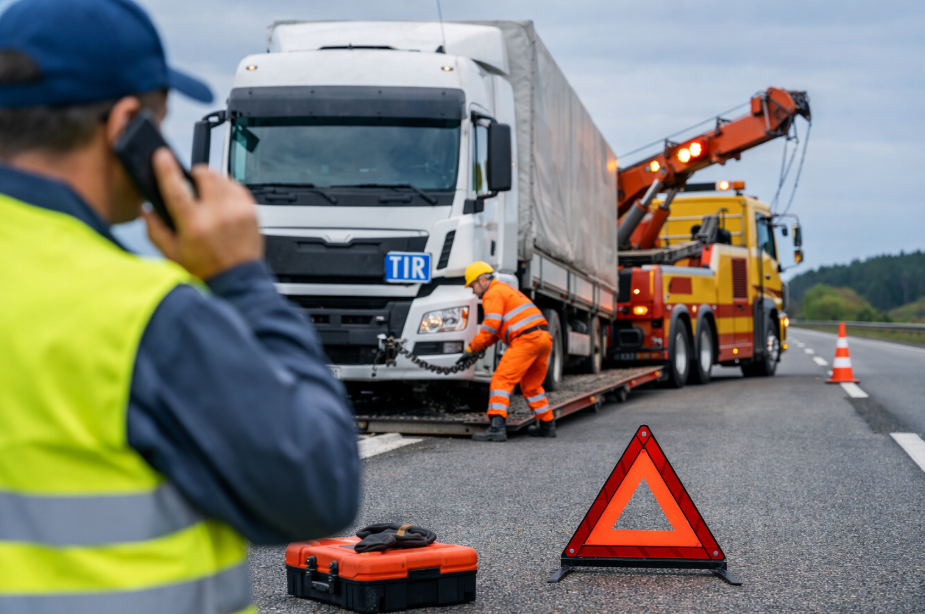
A truck breakdown can turn a routine route into a stressful and expensive disruption within minutes. Whether it happens on a motorway, near a border crossing, or on a local road, the driver and fleet operator need to act quickly, calmly, and in the right order. In such moments, the first priority is safety, followed by fast communication and professional support. If the vehicle cannot continue, arranging holowanie TIR becomes one of the most important steps, especially when time-sensitive cargo, legal driving hours, and traffic safety are all at stake.
Stay Calm and Secure the Scene First
The first few minutes after a breakdown matter most. Panic often leads to rushed decisions, poor communication, and unnecessary danger. A heavy vehicle stopped on the roadside creates a risk not only for the driver, but also for other road users.
Start by securing the scene immediately. Turn on the hazard lights and move the truck, if possible, to the safest available location. If the vehicle is still rolling but clearly failing, try to guide it to an emergency lane, parking bay, or shoulder without creating extra risk. If the truck has already stopped completely, keep calm and focus on visibility.
The driver should then:
- Put on a reflective safety vest
- Place a warning triangle at the legally required distance
- Switch on all relevant emergency lights
- Avoid standing near moving traffic
- Exit the vehicle only when it is safe to do so
These basic actions reduce the chance of a secondary accident. Many serious roadside incidents happen not because of the original fault, but because the stopped vehicle was poorly marked or the driver remained in a dangerous position.
Assess the Problem Without Taking Risks
Once the area is secured, it is time to understand what happened. Not every mechanical issue requires full towing. Sometimes a truck can be repaired on site, restarted safely, or moved after a short intervention. Still, no diagnosis should involve unsafe roadside repairs.
Drivers should look for the most obvious signs first. Is there smoke, a burning smell, fluid under the vehicle, damage to a tire, or warning lights on the dashboard? Did the engine lose power gradually, or did the truck stop suddenly? These details are useful when speaking with dispatchers, mechanics, or roadside technicians.
At this stage, avoid risky improvisation. Do not crawl under the vehicle on an active roadside. Do not attempt electrical work without proper equipment. Do not ignore signs of brake failure, overheating, or steering issues. A quick roadside guess is never worth a larger repair bill or a more serious hazard later.
Inform Dispatch, Client, and Relevant Services
Communication should happen early, not after long attempts to solve the issue alone. The transport company, dispatcher, or route coordinator needs to know the status immediately. In many transport operations, response speed affects delivery planning, replacement scheduling, customer communication, and legal compliance.
When reporting the breakdown, provide:
- Exact location or GPS coordinates
- Direction of travel
- Vehicle registration details
- Type of cargo
- Description of the fault
- Whether the truck is blocking traffic
- Whether there is any visible danger, such as leaking fluids or smoke
If the load is sensitive, refrigerated, oversized, or under strict delivery terms, the operator may need to arrange an urgent backup vehicle. If the truck is in a dangerous spot or causing a traffic obstruction, local road services or police may also need to be informed.
Clear communication helps avoid delays and confusion. The more precise the first report is, the faster the right help can be sent.
Decide Whether On-Site Repair or Towing Is the Better Option
One of the biggest mistakes after a truck breakdown is choosing the wrong type of assistance. Not every situation calls for the same response. Some failures can be handled by mobile mechanics. Others require workshop recovery, lifting equipment, or a specialist towing unit designed for heavy commercial vehicles.
The decision usually depends on three things:
- The type of fault
- The location of the truck
- The urgency of getting the vehicle or cargo moving again
For example, a battery issue, minor electrical problem, or air system fault may be resolved on site. A seized engine, gearbox failure, axle damage, serious tire destruction, or accident-related damage usually makes towing the only practical option.
This is exactly where professional heavy-duty assistance becomes essential. Midway through the process, once it is clear the truck will not continue safely, contacting Pomoc Drogowa TIR can save valuable time and reduce operational losses. The right team can quickly assess whether the truck should be repaired where it stands, recovered to a workshop, or moved to a secure location for further action.
Prepare the Information the Recovery Team Will Need
Heavy vehicle recovery is not like standard passenger car towing. The service provider needs exact details to send the correct truck, equipment, and personnel. If the information is incomplete, the response may be delayed or the wrong setup may arrive.
Before calling or while waiting for confirmation, gather the following:
- Truck make and model
- Tractor unit only, or full set with trailer
- Total weight and load status
- Nature of the cargo
- Type of failure or visible damage
- Accessibility of the location
- Whether the vehicle is upright, stuck, or damaged after a collision
If the truck is carrying hazardous, oversized, or temperature-controlled cargo, this must be mentioned at once. Recovery planning for an empty tractor unit is very different from planning assistance for a fully loaded articulated truck.
Good preparation also helps the operator estimate timing and choose the safest recovery route. It reduces back-and-forth calls and gives the driver more confidence during a stressful situation.
See also: How Proper Business Formation Reduces Risk and Unlocks Opportunity
Protect the Cargo and Documentation
A breakdown does not only affect the truck. It can also create legal and financial complications involving the cargo, transport documents, insurance records, and customer commitments. That is why the driver should secure the paperwork and check whether the load itself is at risk.
Important documents should stay organized and accessible, including:
- Registration documents
- Insurance papers
- CMR or delivery papers
- Service and fleet contact details
- Any incident photos taken at the scene
If the truck is carrying goods that may spoil, shift, or become unsafe during a long roadside stop, the company may need to organize transshipment. This is especially important for food transport, pharmaceuticals, electronics, and fragile freight.
It is also wise to take clear photos of the vehicle, the fault area if visible, the roadside position, and any outside damage. These images can support insurance claims, workshop assessment, and later reporting.
Know What Happens During Heavy Truck Towing
Many drivers and even some fleet managers do not fully understand how heavy-duty towing works. With passenger cars, the process is usually simple. With a TIR vehicle, the situation can be more technical and more regulated.
A professional towing procedure often includes:
- Initial roadside assessment
- Safety setup around the truck
- Decision on lifting, winching, or direct tow
- Disconnecting or securing damaged components
- Preparing axle, steering, or braking systems
- Recovering the tractor unit or full combination
- Transporting the vehicle to a workshop, yard, or destination point
In some cases, the trailer may need separate handling. In others, the cargo must be moved before recovery can begin. If the truck is in a ditch, on soft ground, or involved in a collision, recovery may take longer and require cranes or advanced winching systems.
This is why choosing a team experienced in commercial vehicle incidents is so important. The right specialists will understand not only towing technique, but also roadside law, traffic management, and the specific needs of logistics operators.
What Drivers Should Avoid After a Breakdown
Even experienced drivers sometimes make avoidable mistakes under pressure. These errors can make the situation worse, increase repair costs, or create liability issues.
Here are the most common things to avoid:
- Continuing to drive after a serious warning sign
- Accepting help from unqualified roadside operators
- Giving incomplete information about the vehicle or load
- Standing too close to traffic while waiting
- Trying unsafe roadside repairs
- Forgetting to inform dispatch early
- Ignoring photo documentation and incident notes
Another common problem is delay caused by false optimism. If the truck clearly cannot continue safely, it is better to organize professional help quickly than lose valuable time hoping the issue will disappear after a restart.
How Companies Can Reduce Downtime in Future Breakdowns
Breakdowns will never disappear completely from road transport, but their impact can be reduced. The companies that handle them best are usually the ones that prepare in advance rather than react chaotically.
A smart breakdown response plan should include:
- A list of trusted heavy vehicle assistance providers
- Driver instructions for roadside incidents
- Quick reporting templates
- Access to vehicle and cargo details in one place
- Internal procedures for cargo transfer and client updates
Regular maintenance also remains essential. Preventive servicing, tire checks, brake inspections, and fault code monitoring reduce the chance of major roadside failure. Driver training matters too. A well-trained driver can communicate more clearly, secure the scene properly, and avoid actions that turn a minor issue into a major one.
The Smartest Move Is Acting Fast and Acting Right
When a TIR breaks down, every minute counts. Safety comes first, but efficient decisions come next. The right sequence is simple: secure the vehicle, assess the situation, inform the right people, and arrange qualified help without delay. This approach protects the driver, the cargo, the vehicle, and the delivery schedule.
A breakdown on the road is never convenient, but it does not have to become a disaster. With calm action, clear communication, and professional support, even a serious incident can be managed with minimal disruption. In heavy transport, experience matters, and so does choosing the right help at the right moment.